Countertop Dishwasher: How to Choose and Reviews
A practical guide to choosing a countertop dishwasher: capacity, place settings, energy use, noise level, pros and cons, and how to read owner reviews.
Contents
- What a countertop dishwasher actually is
- Match capacity to your daily dishes
- How it connects to water and power
- Energy use and running cost signals
- Noise level and where to place it
- Reading owner reviews and Reddit opinions
- Pros and cons to weigh before buying
- A simple way to choose and set up
- Keeping a compact unit clean and working
- Countertop dishwasher questions answered
- Is a countertop dishwasher worth it for one person?
- What do Reddit owners say about countertop dishwashers?
- How many place settings do I need in a compact dishwasher?
- Does a countertop dishwasher need plumbing?
- How noisy is a countertop dishwasher?
- Can a countertop dishwasher fit under a cabinet?
A countertop dishwasher is a compact dishwasher that sits on a work surface, hooks up to the kitchen tap, and cleans a small load without a dedicated plumbing line. Choose one by matching its stated place settings to your daily dishes, then checking energy use, noise level and how it connects to your water supply. Reviews and owner opinions help, but read them for the pattern they show rather than a single verdict.
- Match the stated place settings to the dishes you actually dirty in a day, not to a dinner party.
- Check the water connection method before buying, since most countertop models fill from the tap.
- Compare energy use and noise level on the label or spec sheet rather than in marketing text.
- Read owner reviews for repeated complaints about the same part or function.
- Measure the space above and beside the unit, including the clearance for the lid and hose.
What a countertop dishwasher actually is
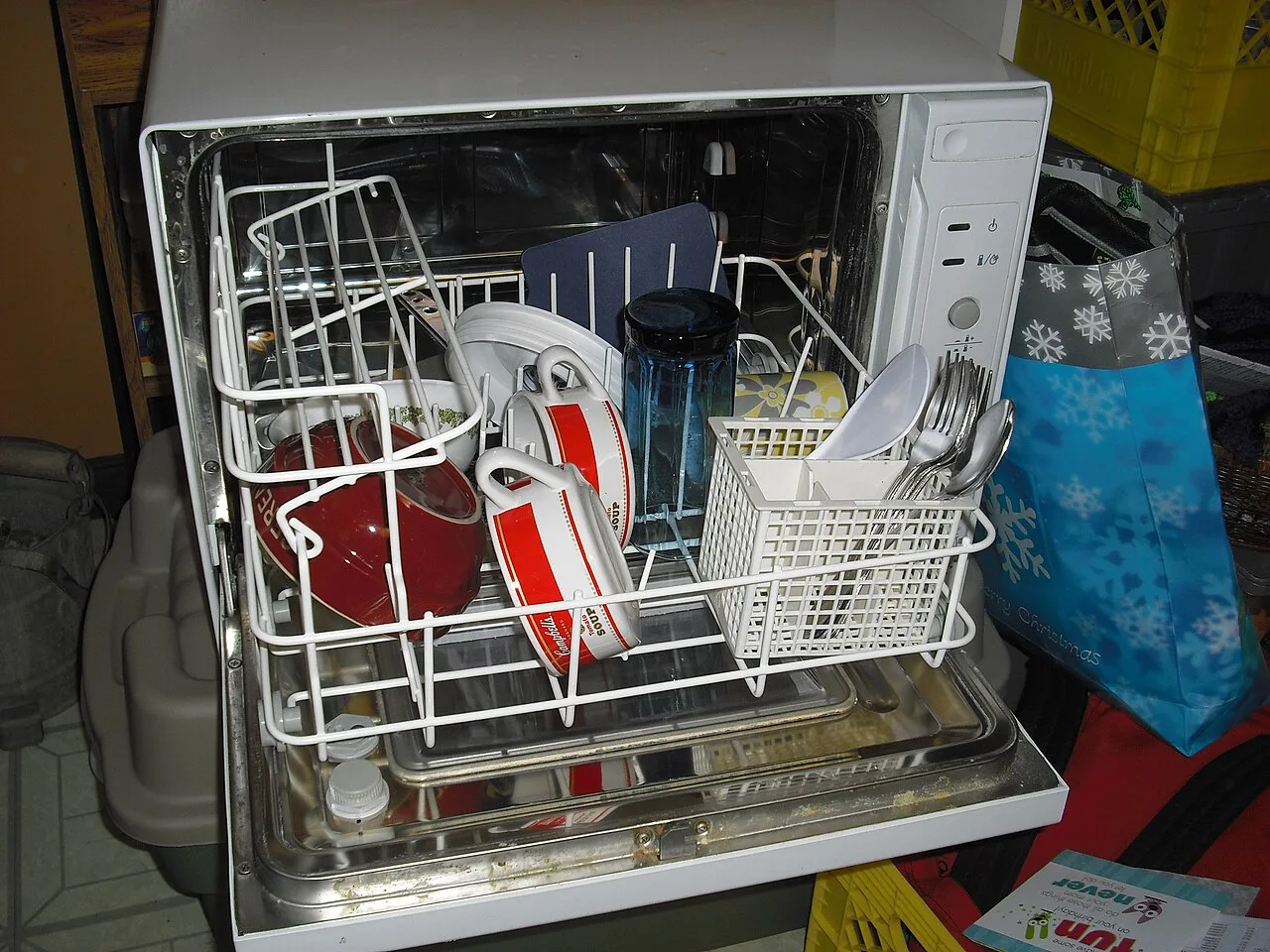
A countertop dishwasher is a small dishwasher designed to stand on a kitchen counter rather than under it. The appliance holds a wash arm, a filter and a basket in a case roughly the size of a microwave. Most models connect to the kitchen faucet with a hose and drain into the sink.
The compact dishwasher format suits a kitchen where a full-size under-counter unit will not fit or cannot be plumbed. It also works as a second machine for a small household that runs a load daily. The trade is capacity: a countertop model holds far less than a full-size machine.
A countertop dishwasher still needs a stable, level surface and a nearby power outlet. The hose run to the tap should not kink or stretch tight across a walkway. Plan the spot before you buy, because the machine stays where you put it.
Match capacity to your daily dishes
Capacity on a countertop dishwasher is stated in place settings, meaning one person's set of plates, bowl, glass and cutlery. A small model may list a low number of place settings, while a larger countertop unit lists more. Match that figure to the dishes your household dirties in a single day.
Place settings describe a standard load, not your actual load. Tall glasses, mugs, chopping boards and pans take space that the setting count does not capture. Think about the tallest item you need to wash and check the interior height against it.
A household of one or two people fits the small end of the range well. A household that cooks from scratch each day generates bowls, boards and pans that a compact unit may not take in one go. In that case, plan for a second cycle or keep some items for hand washing.
| Household pattern | Capacity to look for | What to check |
|---|---|---|
| One person, light cooking | Small place setting count | Height for a tall glass or mug |
| Two people, daily cooking | Mid to upper place setting count | Room for bowls and a small pan |
| Frequent entertaining | Largest countertop size available | Basket layout for stacked plates |
How it connects to water and power
Water connection is the first practical check for a countertop dishwasher. Many models fill through a hose that clamps onto the kitchen faucet, so the tap is out of use during a cycle. Some models can be plumbed permanently into the supply instead.
A faucet adapter must fit your tap thread, and adapters vary by tap design. Check the tap type before buying and confirm the adapter is included or available. A permanent connection needs a trained plumber where local rules require one.
Drainage usually runs into the sink, so the hose needs a steady downward path. Power comes from a standard outlet, and the machine should not share an overloaded circuit. Keep the cord and hoses clear of the hot tap and the sink edge.
Energy use and running cost signals
Energy use on a countertop dishwasher depends on cycle length, water temperature and how often you run it. The spec sheet or energy label states consumption per cycle for a standard program. Compare that figure rather than the size of the machine.
A short cycle uses less energy than a heavy cycle but may clean less thoroughly. Pre-rinsing dishes under a hot tap adds water and heat that the label does not count. Scrape food off and let the machine do the washing to keep energy use in line with the label.
How you pay for energy depends on your tariff, so no fixed running cost applies to every home. Use the per-cycle figure with your own rate to estimate cost. A machine run half full wastes both water and energy.
Noise level and where to place it
Noise level is stated in decibels on the spec sheet, and a lower figure means a quieter cycle. Sound carries in a small kitchen or an open living space, so compare the decibel rating across models. A machine that runs while you sit nearby is worth checking on this figure.
Placement changes how loud a countertop dishwasher sounds. A unit on a solid counter transmits less vibration than one on a thin or hollow surface. Keep a small gap behind and beside the machine so air can move and the case does not rattle.
Some machines offer a delay start, which lets you run a cycle when the room is empty. Check whether the model has this feature if noise at mealtimes matters. Run time on the chosen program also affects how long you hear it.
Reading owner reviews and Reddit opinions
Countertop dishwasher reviews are useful when they describe a repeated pattern rather than a single experience. Look for the same complaint appearing across several owners, such as a weak drying result or a leaking hose joint. One negative review can reflect a faulty unit rather than the design.
Reddit owner opinions give detail that short reviews often skip, including how a model behaves after months of use. Search a subreddit for the model name and read threads where owners compare notes. Treat strong praise and strong criticism alike as claims to check against the spec sheet.
Check whether a reviewer describes the same capacity, connection type and household size as yours. A review from a large household says little about a one-person kitchen. Reviews that name the specific part that failed are the most useful to act on.
Pros and cons to weigh before buying
A countertop dishwasher saves the space and plumbing work of a full-size unit and fits a small kitchen. The machine washes a daily load without hand washing everything, which matters where sink space is tight. Setup is simpler than a built-in install in many kitchens.
The countertop dishwasher occupies work surface that you may need for food preparation. Capacity is limited, and tall items or large pans may not fit. A faucet connection can block the tap during a cycle and needs an adapter that fits your tap.
Weigh those points against your daily dish volume and the surface you can spare. A model with a removable basket and a delay start adds flexibility for a small kitchen. Keep the manual and the adapter together so a future move does not lose them.
A simple way to choose and set up
Start by measuring the counter space, the height to any shelf above, and the distance to the tap. Note your tap type so you can confirm the adapter fits. Then compare models on place settings, interior height, energy use per cycle and noise level.
Read owner reviews for the shortlisted models and look for repeated faults in the same component. Check that the drain hose reaches the sink without a kink. Confirm the outlet is within reach of the cord and not shared with a heavy appliance.
Before the first cycle, flush the supply line and fit the adapter as the manual directs. Load the basket so water reaches every surface and no item blocks the spray arm. Clean the filter on the schedule the manual gives to keep performance steady.
- Measure counter depth, width and the height to the shelf above.
- Identify your tap type and confirm the adapter fits.
- Compare place settings, interior height, energy use and decibels.
- Read reviews for repeated faults in the same part.
- Check the drain hose path and the power outlet position.
Keeping a compact unit clean and working
A countertop dishwasher needs its filter cleaned often because a small basket collects food scraps quickly. Rinse the filter under the tap and refit it as the manual shows. A blocked filter reduces wash quality and can leave grit on glasses.
Wipe the door seal and the edge of the case to stop residue building up. Run a cleaning cycle with a dishwasher cleaner on the schedule the manual recommends. Descale if your water is hard, using a product made for dishwashers.
Check the hose and adapter joints for drips after each cycle in the first weeks. A loose clamp is a simple fix, while a split hose needs replacing. Stop using the machine and call a trained technician if water reaches the electrics.
Countertop dishwasher questions answered
Is a countertop dishwasher worth it for one person?
Yes, a countertop dishwasher can suit one person who cooks at home and wants a daily load washed without filling the sink. Its capacity matches a small set of dishes, and it needs only a counter spot and a tap connection. Check the interior height for tall glasses before you commit.
What do Reddit owners say about countertop dishwashers?
Reddit owner opinions on countertop dishwashers tend to focus on real use over months, including drying results, hose joints and noise. Read threads where owners name the model and describe their household size. Use those opinions to spot repeated faults, then check the spec sheet for the facts.
How many place settings do I need in a compact dishwasher?
The place settings you need depend on how many dishes your household dirties in a day, not on the size of the machine. One or two people fit a small to mid count, while daily cooking for more needs the upper end. Measure your tallest item against the interior height as well.
Does a countertop dishwasher need plumbing?
A countertop dishwasher usually needs no permanent plumbing because it fills from the kitchen faucet through a hose and adapter. Some models can be plumbed into the supply instead, which needs a trained plumber where rules require one. Confirm the adapter fits your tap type before buying.
How noisy is a countertop dishwasher?
A countertop dishwasher states its noise level in decibels on the spec sheet, and a lower figure means a quieter cycle. Sound is more noticeable in a small or open kitchen, so compare the rating across models. A solid, level counter reduces vibration and rattle.
Can a countertop dishwasher fit under a cabinet?
A countertop dishwasher fits under a cabinet only if the clearance above it allows the lid or top to open and the hoses to run. Measure the height to the shelf or cabinet above before buying. Leave a gap for air movement so the machine does not overheat.